✉:

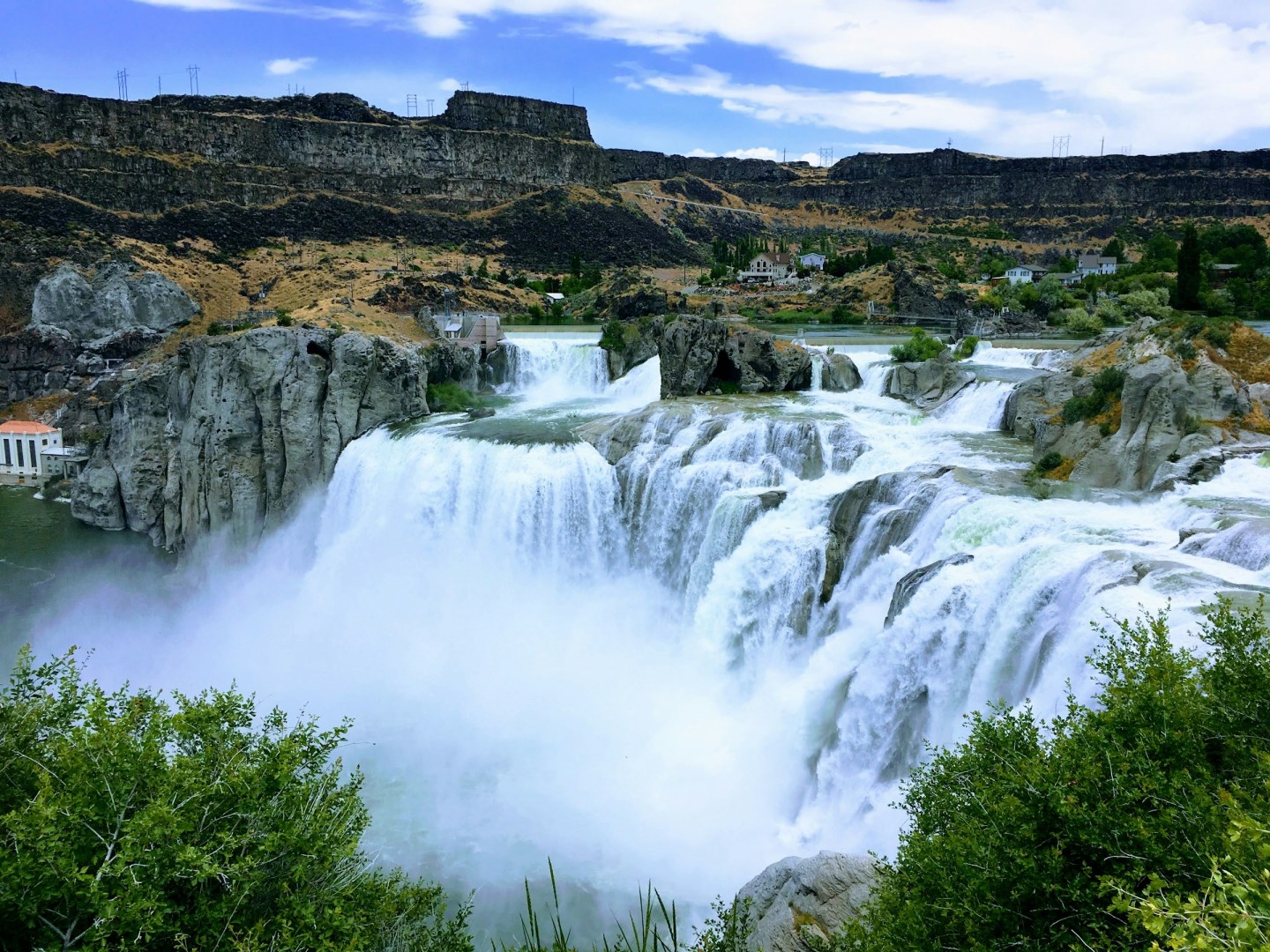
Twin Falls is a city in southern Idaho overlooking the Snake River Canyon, where the Snake River has cut through the surrounding basalt landscape. The city serves as a regional center for the Magic Valley and is known for its access to canyon viewpoints, waterfalls, farmland, and river recreation. The Perrine Bridge crosses the canyon at the northern edge of the city and is a prominent local landmark. The surrounding landscape also reflects the importance of irrigation, with extensive agricultural fields made productive by water diverted from the Snake River and its tributaries.
The area has long been connected to Indigenous peoples, including the Shoshone and Bannock, whose traditions and seasonal activities were tied to the Snake River and surrounding plateau. European American settlement expanded with irrigation and agriculture, transforming the dry landscape into a productive farming region. The Twin Falls County Historical Museum preserves objects and stories related to local settlement, while the Herrett Center for Arts and Science at the College of Southern Idaho explores regional natural and cultural history. The city also retains connections to the early development of irrigation, farming, and transportation in the Magic Valley.
The Snake River Canyon provides Twin Falls with some of its most distinctive attractions. Shoshone Falls, east of the city, drops over a broad basalt ledge and is often called the “Niagara of the West,” while nearby Dierkes Lake offers swimming, fishing, and picnicking. The Canyon Rim Trail follows the edge of the gorge and provides views of the river, Perrine Bridge, and surrounding cliffs. Visitors can also reach Centennial Waterfront Park, where trails and overlooks sit below the canyon rim. The area is associated with BASE jumping from Perrine Bridge, one of the few locations in the United States where the activity is permitted year-round.
Other Popular Destinations in Idaho